Friday, December 6, 2013

My Reflections on Nelson Mandela

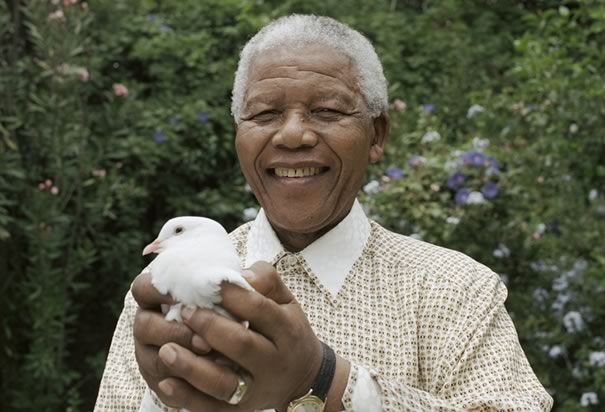
Image from BCLC

Nelson Mandela was a not only a great man, but also a humble man, and a man of vision courage and wisdom. To me, he was a hero, a hero at a time when we have too few.


Nelson Mandela understood trauma.  He survived twenty-seven years in prison. He believed in justice and forgiveness. He invited his jailer to his inauguration to be president of South Africa.


In 1996 I was invited to South Africa to be part of a delegation of trauma therapists to study post-traumatic stress.  This was a time when South Africa was in the midst of massive social change, beginning to rebuild its very foundation. I had the privilege of attending the inauguration of the Truth and Reconciliation Commission in Capetown.  President Mandela stood in that church in Capetown because he believed that the traumas of the past must be addressed and acknowledged or they would come to haunt the new South Africa.


The Truth and Reconciliation Commission was a public forum for private grief where many would come to understand the power of community witnessing.  Its mission was to encourage truth telling about what happened during the years of apartheid and, through hearing the truth, to mourn and heal.


Image from History Channel, Text Added

“Ordinary South Africans", Nelson Mandela explained, "are determined that the past be known, the better to insure that it is not repeated. They seek this not out of revenge, but so we can move into the future together.”


In dark times, Nelson Mandela’s story, his legacy, can give hope and inspiration. To transform traumatic experiences into acts of justice and forgiveness is a way to honor his legacy. Surely we will all fall short but that does not give us an excuse not to try.


-Laurie Kahn, MA, MFA, LCPC, Director of Womencare Counseling Center

Tuesday, December 3, 2013

Staying Honest This Season


I know you celebrate something... Kwanzaa, Hanukkah, Christmas or that Seinfeld holiday George made up. There is almost inescapable, manic pressure in our country to wrap perfect presents when the weather turns cold. Whatever it is that has you pulling out your dress slacks and making that bread bowl spinach dip people go crazy for, I actually won't suggest that you "remember the reason for the Season.”

I won't suggest you savor the glow in a child's eyes as the warm radiance of holiday lights glisten off the snow reflecting their timeless joy. Those messages often shame us. We end up hauling our overtired 6-year-old away from the damn bowl of red and green M&M's for the millionth time at the holiday party of the snippy neighbor we resolved to be nicer to, using that harsh voice we resolved last New Year’s to abolish.

I could instead give you permission to leave the wrapping paper all over the floor and roll in it after opening presents, to get a babysitter on December 23rd, and eat the grilled cheese sandwich you actually like, instead of your aunt's beef wellington.

That's good, but what I really want to suggest you do this winter is something taboo. Really taboo. I want you to talk to your kids about how all the pressure of the magic and merriment stresses people out and explain that they're probably feeling that too. About how wonderful family get-togethers sometimes cause a confusing pit in their stomachs because it seems like everyone is smiling, but a lot is not being said. I want you to notice when your child is looking out the window with glazed eyes and ask yourself, have they been so bowled over by the frenzy to be blissful that they're panicked something is wrong with them because they're feeling drained and dissatisfied?


Holidays are hard for kids, too. Maybe harder. They don't know that it's a bunch of bunk to have the brightest bow, the best new bike, and the most creative holiday plans to go skiing, help the homeless, and batik your own Holiday Cards. They see the commercials and holiday marketing, too. So, create a magical holiday for them by making the spinach dip, stringing up lights, AND talking to them about how icky it was that Mommy and Daddy yelled at each other in the grocery store over what size Pannetone cake to get for the new 4th grade science teacher.  

It won't take away from the magic-  being honest and present is the magic. It will make the holidays cleaner, clearer, and better connected. Looking at the bad doesn't negate the good. You'll emerge partners in knowing that you'll be there for them in whatever confusing illusion is wrapping everyone else up in stress and sparkly sweaters. They'll know you see them… and nothing feels better at any time of the year.

*This post was written by Womencare Staff Member Jennifer Cutilletta, LCSW

Tuesday, November 26, 2013

Multicultural Holiday Lessons from Childhood


Imagine a gymnasium full of elementary school-aged children singing Hanukkah songs like “I Have A Little Dreidel” and “Hanukkah, O Hanukkah” right along with traditional Christmas carols.  This was the scene in December at my public elementary school in Lincolnwood, Todd Hall.  One of the ways that I learned about Hanukkah, the Jewish eight-day festival of lights celebrated sometime in November or December, was through songs.  In middle school, my friends and I attended bar and bat mitzvahs, Jewish coming of age rituals.  I was extremely fortunate to have grown up in a diverse neighborhood. 

I also remember that around the holiday season or sometimes before it, there was a boy who would stay inside for indoor recess for a few weeks.  His family was Muslim, and he was fasting for the month of Ramadan.  During Ramadan, practicing Muslim families fast between sunrise and sunset.  Although I did not appreciate this as much as I do now, by choosing to support this child’s family’s religious practices by providing him with a safe space, my school was teaching me cultural competency.  Sharing the same classrooms and playgrounds with children from diverse religious and cultural backgrounds was one of the most valuable experiences I could have been given as a child.

During this holiday season, I encourage you to embrace the diversity in your own neighborhoods.  Whether this diversity stems from differences in culture, religion, socioeconomic status, sexual orientation, gender expression, special needs, or some other way we are different, we can find small and large ways to learn from and connect with each other and our shared humanity.  Check out this multicultural holiday calendar.


This blog post was written by Alissa Catiis, Staff Therapist and Yoga Teacher at Womencare Counseling Center.

Thursday, November 21, 2013

Stress Reduction for the Holidays

The Thanksgiving season is a time of year to stop and reflect on all we have to be thankful for in our lives. However, it is also a time when unique seasonal stressors can take center stage. Traffic, weather changes, holiday shopping, and busy schedules are some common stressors in November and December. This season can also bring up some more serious stressors including financial concerns, unhealthy family dynamics, and feelings of loneliness.


When feeling stressed, consider these strategies:

  1. Exhale. After you have fully exhaled, inhale slowly. Your breath is really central for bringing your nervous system from the stressed sympathetic nervous system to the more relaxing and calming parasympathetic nervous system. 
  2. Take 5. This can be 5 minutes to yourself, 5 slow breaths, or 5 paces. 
  3. Consider starting a contemplative practice, even if it is only for one minute every day. How might your work day change if you started every morning with one minute of silence or one minute of focused attention on your breathing? How might one minute of silence at the start of a meeting change workplace dynamics? How might your home change if you spent one concentrated minute looking at a safe, comforting object or work of art every evening? 
  4. Stretch. I invite you to take a moment to center and ground yourself in your chair. You can interlace your fingers and stretch your arms up above your head and over to each side, if you like. Notice that your breath can always be moving, even when you are doing a simple stretch. 
  5. Self-massage. Massage your neck, shoulders, arms, scalp, hips, or wherever you feel like you are holding tension and stress. 
These are some of my favorite tips for reducing stress around the holiday season. What are some of your favorite tips?

This blog post was written by Alissa Catiis, Staff Therapist and Yoga Teacher at Womencare Counseling Center.

Wednesday, November 20, 2013

A Truly Special Holiday Season: What Families With Special Needs Wish People Knew For The Holidays

Glowing candles. Ringing bells. Hugs. Cheek pinching. Kisses. Food. Presents. Snow. More food. 

The holiday season often puts us all in overload, but for families with special needs, it means navigating an emotional and sensory minefield. And, with the best will in the world, extended family can contribute to that- or they can help with it.   We all want holidays to have meaning, tradition and joy.

When your little one lives a little differently in the world, you don’t wish for the newest Elmo, you wish for family and friends to get it and to help make the holidays special- even if it’s in a new way.


It’s hard to understand and remember all the pieces that we families with special needs hold. Some things to think about…

Forcing the magic

Many families named their wish that people would understand that their kids don’t always find the magic in the usual places- whether it be spinning the dreidl or visiting Santa. Many parents have had to let go of their own wish for their kids to respond to holiday traditions as they did or their other children do and have had to accept a different picture- it can hurt to renegotiate this acceptance with every push from yet another family member. Try to realize that every kid has a different experience.

“Johnny doesn’t get Santa. And doesn’t care,” says Anna, whose 6-year-old has Down Syndrome. My son, who also has Down Syndrome, LOVES Santa… but he loves all jolly, grandfatherly men. He loves our local crossing guard with equal enthusiasm.

Gift-giving can also disappoint, when kids have- or demonstrate- a lack of interest. Sometimes, kids are overwhelmed; other times, they really don’t care. But when the giver is obviously disappointed, parents feel badly, even though they truly appreciate the care their families put into choosing gifts or arranging special experiences. As a visible expression of love and respect, efforts at inclusion matter for the child, their siblings and their parents, but so does acceptance of what truly matters to the child.

“Nick wants the same things at holidays as he does the rest of the time, love and cuddles, someone to dance with him to music, more pretzels and blueberries,” writes Audrey.

Safety issues

Many kids with special needs take off when the spirit moves them. And they take off quickly. “It would be so helpful if people would secure their houses- doors and maybe dangerous basement rooms.  We tell people they need to baby-proof, but to remember that he has the capability of a 12-year-old to figure out locks. But they still don’t quite get it, and then he’s running off into traffic or down the street,” says Hannah, whose 8 year-old-son has autism. Ask parents about reasonable interventions to keep their child safe- or be prepared for them to have to follow their child around all day.

Dietary issues

Most people worry about weight gain over the holidays. For families with special needs, there may be more immediate concerns, such food intolerances or sensory issues.  Some kids exhibit immediate and intense reactions to foods most people ingest without difficulty. Ask parents what concerns exist, or ask for suggestions for safe food. But don’t assume everyone will “find something,” or be offended when the family brings a special dish or meal for their child. And please respect the reality of the family’s experiences- don’t dismiss celiac disease as a fad, or a sensory issue as poor parenting. “My mom thought I was being mean when I stopped him after two cookies,” says Jen, whose child has food sensitivities and sensory issues. “After all, it was Christmas and he was at Grandma’s house.”  Trust the parents- odds are very good they’ve spent hundreds of hours and much money in determining what’s safe or in helping their child tolerate even a limited variety of foods.

Physical Needs

Please feel free to ask families if there are particular physical issues that you can try to help them address. Don’t assume it’s more polite to pretend everyone is the same, and might not need some special thought. For some families, “normal” days means figuring out how their child will be able to use the bathroom, or get up stairs, in homes that aren’t wheelchair accessible. For others, it’s providing cleared paths for those that are visually impaired. It’s a huge relief when others reach out to think with them, and when the goal is clearly to make the day good for everyone.

Food or sleep schedule

Some kids get a little more than cranky when hungry or sleep-deprived. (Remember the Hulk? ) With already irregular holiday schedules, children, and their parents, may be holding onto calm by the skin of their teeth. For kids needing a routine and very clear expectations, the thought of eating a meal at 3 p.m. instead of their usual 5 or 6 p.m. can be incredibly disregulating. Please support the parents if they attend to their kids’ needs separately.  Keep in mind that they’re doing it for the whole family’s sake, as well as their child. And trust the parents who insist on a regular bedtime… really.

Sensory overwhelm

Create a sensory corner- a quiet area that isn’t covered in glitter or surrounded by candles. Probably a good idea for all children, it’s essential for some. Some kids take matters into their own hands. It took time for me to understand why my son would immediately hunt out bedrooms in whatever house we visited. I finally realized he was seeking a safe space for when he was overwhelmed. Quietly pointing out a corner with books or a TV and naming permission to use it could be the biggest gift of all.


In the end, we all want a little magic to lighten the dark hours of winter. Ultimately, the true magic this season may be when we open our eyes and try to be with each other just as we are.

*All names in this article have been changed*

Ellen Lonnquist, MS, LMFT, is a family therapist at Womencare Counseling Center in Evanston, IL and a mother to two beautiful kids, one of whom has Down Syndrome. 

Thursday, November 14, 2013

Ubuntu - The Meaning And Power of Groups


This is a story from Laurie Kahn’s introduction to our conference about the meaning and power of groups. 


In 1998, when I visited trauma clinics in South Africa, I met Craig, a psychologist in South Africa. Craig was assigned to meet with a group of women who had lost their homes.

Many of the women had also lost their sons in the struggle to end apartheid. Craig hoped he could be a vehicle for healing for these women. He hoped he could help them with their grief. 

“How can I help?”  Craig asked.   

“We want tools for a garden,” the women responded. 

“But, I am a psychologist.” 

“That’s nice," the women said, “we need tools for a garden.”

I don't know anything about gardening, Craig thought.  But, Craig found a way to round up some tools for the women of this township to till a garden.

In the heat of the day, the women gathered together to create a garden. With sweat on their brows, they dug in the earth, they told their stories, they cried together, they sang danced and planted food for their families. 

They had no interest in talking to one person; they had no interest in being away from the land or to be inside behind a closed door. What they needed to heal was each other and a shovel in their hands.

The central spiritual belief of South Africans I learned is embodied in the word ‘Ubuntu.’  Ubuntu is the essence of being human. It speaks about interconnectedness. “You can't be human all by yourself,” Bishop TUTU was fond of saying.

-Laurie Kahn, MA, MFA, LCPC


Image Credits: Image One, Image Two

Wednesday, November 13, 2013

Being A 'Helper' After Typhoon Haiyan

Our hearts go out to those in the Philippines as they begin their struggle to recover from the devastation of Typhoon Haiyan (known in the Philippines as Typhoon Yolanda), reported to possibly be the most powerful storm ever to make landfall. From the reports of the impact of the storm, it will take a lot of helpers to support this country in beginning to put the pieces back together. We know the healing that can come from knowing that there are people out there trying to help in the wake of tragedy. 

“When I was a boy and I would see scary things in the news, my mother would say to me, "Look for the helpers. You will always find people who are helping.” 
-Fred Rogers

We have attached a graph of helping organizations, if you are able to and would like to be one of the helpers.  

-Ellen Lonnquist, MS, LMFT